
In Part 1 of this guide, we covered why Northern New Jersey wells are susceptible to iron contamination, how to recognize the symptoms, the four distinct forms iron takes in water, and what iron does to your plumbing, appliances, and household comfort. If you have not read Part 1, the distinction between ferrous, ferric, organic, and bacterial iron is essential context for the treatment decisions in this section.
With that foundation in place, we can address the question most homeowners arrive at after seeing their first orange-stained toilet: what actually fixes this?
The answer depends entirely on what form of iron you have, at what concentration, and what else is in your water. This is why treatment always follows testing, never the other way around.
Why testing before treatment is non-negotiable for iron
Iron treatment is one of the water quality categories where the wrong equipment does the most damage. A system that works well for ferrous clear-water iron at moderate concentrations can be completely ineffective, or actively harmful to downstream equipment, in a home with iron bacteria or high organic iron.
Before any treatment equipment is specified, a targeted water analysis should establish:
- Total iron concentration in mg/L
- Form of iron: ferrous (dissolved) versus ferric (particulate), requiring laboratory speciation or a field test comparing filtered and unfiltered samples
- Iron bacteria: a biological test or field observation of gelatinous deposits
- Manganese: frequently present alongside iron, often requiring its own treatment step
- pH and alkalinity: low pH makes iron more soluble and harder to oxidize and filter; treatment design changes significantly based on pH
- Hardness: determines whether a softener can play a role in iron removal
- Hydrogen sulfide: sometimes present alongside iron, affects treatment chemistry
The New Jersey Department of Environmental Protection provides guidance for private well owners on recommended test parameters and certified laboratories. For iron specifically, we recommend laboratory analysis over home test kits, which are insufficiently precise for designing a treatment system.
The right iron solution for one Northern New Jersey home may be completely wrong for another with nearly identical visible symptoms but different water chemistry just a few miles away.
Treatment options matched to iron type
For ferrous (dissolved) iron: oxidation and filtration
Dissolved iron cannot be filtered directly because it is in solution, not in particle form. The treatment approach requires converting it to a filterable solid through oxidation, and then capturing those oxidized particles in a filter bed.
Air injection oxidation introduces oxygen into the water stream ahead of a filter tank. The dissolved iron reacts with oxygen and converts to ferric particles, which the filter media then captures. This approach avoids chemical addition and is well-suited for moderate ferrous iron levels in otherwise uncomplicated water chemistry.
Chemical oxidation uses a chlorine or hydrogen peroxide feed ahead of the filter. This is more aggressive than air injection and handles higher iron concentrations and water that is difficult to oxidize with air alone. The filter media bed is periodically backwashed to flush captured iron from the system.
Specialty iron filter media, including greensand, Birm, and various proprietary media, are designed to both catalyze oxidation and capture the resulting particles in a single tank. These systems are a common and effective solution for many Northern New Jersey well owners dealing with moderate ferrous iron.
pH matters significantly here. Oxidation of dissolved iron is substantially less efficient below pH 7. If your water is acidic, which is common in parts of our region, pH correction ahead of the iron filter often needs to be part of the system design.
For ferric (particulate) iron: mechanical filtration
Ferric iron is already in solid particle form, so it can be captured directly by appropriately rated mechanical filtration without oxidation. The key variables are:
- Micron rating: the filter media must be fine enough to capture the particle sizes present in your water
- Flow rate: the system must handle your household’s peak demand without excessive pressure drop
- Backwashing capability: for heavy ferric loads, automatic backwashing filters provide much longer service life than cartridge-style filters that require manual replacement
For homes with both ferrous and ferric iron, which is not uncommon, a combined oxidation and filtration system addresses both in sequence.
For iron bacteria: disinfection first
Iron bacteria require a fundamentally different approach from chemical iron treatment. Standard oxidation and filtration systems will not eliminate iron bacteria and may actually provide a surface for biofilm to re-establish.
The treatment sequence for confirmed iron bacteria involves:
- Mechanical cleaning of the well by a licensed well contractor, physically removing accumulated biofilm and deposits from the casing, screen, and pump
- Shock chlorination of the well and plumbing system. Per guidance from the Minnesota Department of Health, chlorine concentrations in the well water should reach approximately 200 mg/L for effective disinfection. This work should be performed by or under the supervision of a licensed contractor.
- Follow-up testing to confirm that iron bacteria have been eliminated before installing any long-term filtration equipment
- Ongoing treatment, typically a chlorine or hydrogen peroxide feed system, if iron bacteria recur, to prevent re-colonization
Only after the well and plumbing are cleaned and disinfected does it make sense to design and install long-term iron filtration for the home.
For organic and colloidal iron: specialized treatment
Organic iron and colloidal iron do not respond reliably to standard oxidation and filtration approaches. The treatment pathway depends on the specific chemistry involved:
- Organic iron bound to humic acids typically requires oxidation followed by coagulation, using a chemical agent to cause fine particles to clump together before filtration
- Colloidal iron with high turbidity and persistent color may require specialized media, altered pH, or multi-stage treatment designed around laboratory analysis of the specific particle characteristics
These are the most technically complex iron scenarios, and they are the ones most likely to result in a failed investment if the wrong standard iron filter is purchased without adequate testing and professional evaluation.
Water softeners and iron: a supporting role
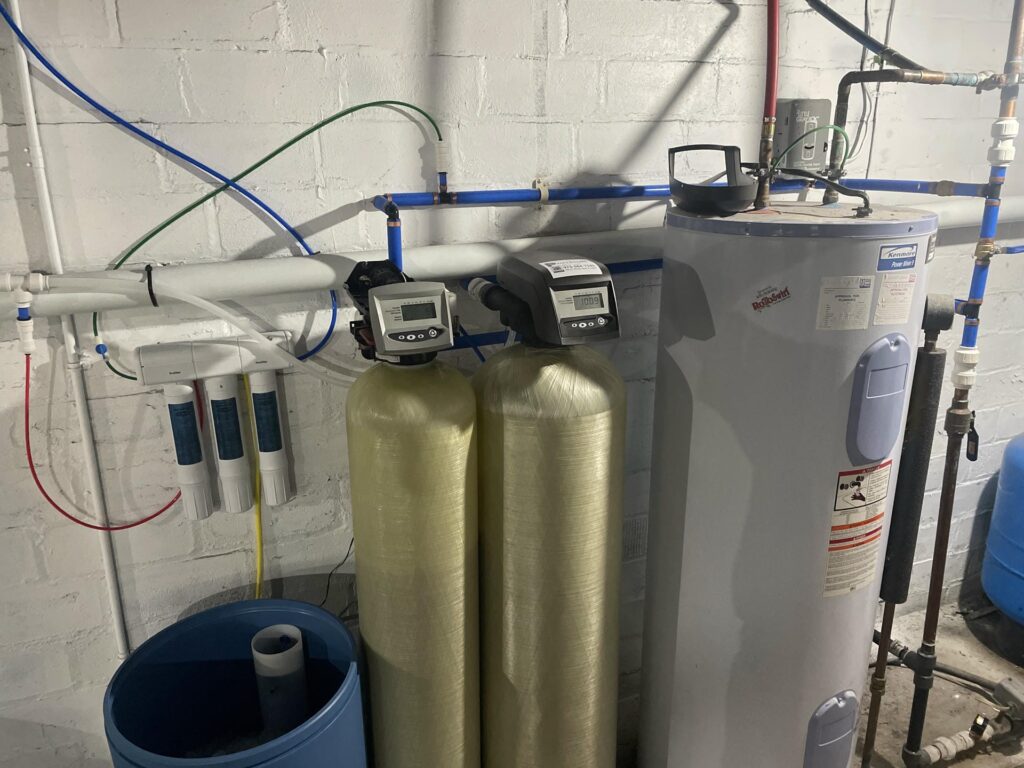
Under the right conditions, a properly sized and maintained water softener can remove low to moderate concentrations of dissolved ferrous iron as a secondary benefit of the ion exchange process. The Water Quality Association notes that standard resin softeners can handle ferrous iron in ranges typically between 2 and 3 mg/L under favorable conditions, with fine mesh resin extending that upper range to approximately 5 mg/L. This is iron removal as a byproduct, not as a designed function.
There are important limitations:
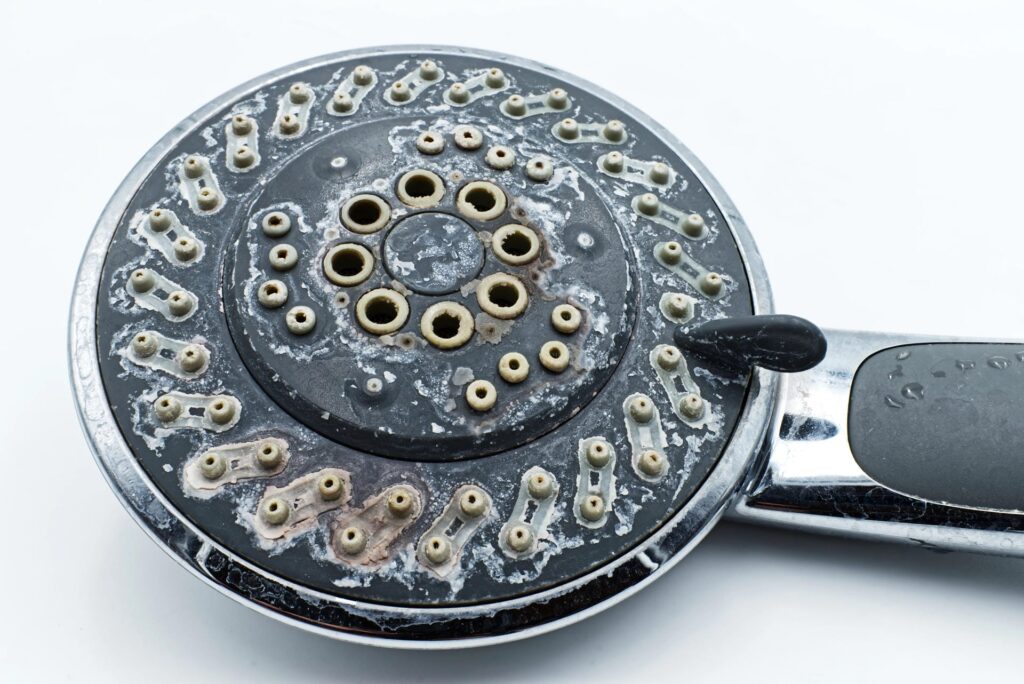
- High iron concentrations will foul the resin bed, dramatically shortening its useful life
- Iron bacteria will colonize softener resin and are essentially impossible to eliminate from a fouled resin bed
- Ferric particulate iron will clog the resin and control valve over time
When iron is a significant issue in a Northern New Jersey well, we recommend addressing it with a dedicated iron filter upstream of the softener, protecting the softener resin and ensuring that each system does the job it is specifically designed for.
Reverse osmosis for drinking water quality
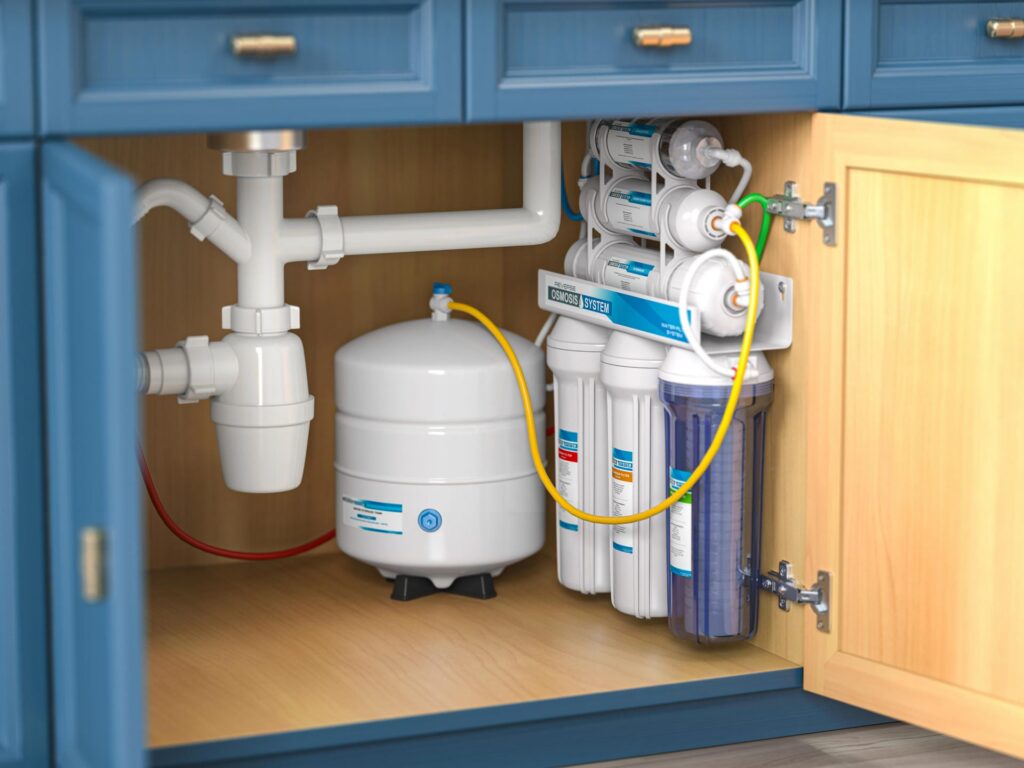
For the kitchen sink specifically, a reverse osmosis system provides highly polished drinking water that is largely free of dissolved iron, manganese, and many other contaminants. RO is not a whole-house iron solution. It treats water at one point of use and produces a relatively small volume of treated water per day. It also produces a reject water stream during the filtration process, which is a normal operational characteristic worth understanding when evaluating the system for your home.
In combination with whole-house iron treatment, RO provides an additional margin of quality for drinking and cooking water. Maintaining an RO system requires consistent filter and membrane replacement on a defined schedule. An unmaintained RO system quickly loses effectiveness and can become a source of bacterial contamination rather than a treatment solution.
Choosing the right iron treatment for your Northern NJ home
With the treatment options above mapped to specific iron types, the decision path becomes more navigable. A practical approach:
Step 1: Test accurately. Get laboratory analysis that specifies iron form and concentration, pH, manganese, hardness, and bacteria. Do not skip this step.
Step 2: Address iron bacteria first if present. Biological contamination must be resolved before any chemical iron treatment system is installed.
Step 3: Correct pH if needed. If pH is below 7 and iron oxidation is part of the treatment plan, pH correction upstream of the iron filter substantially improves system effectiveness.
Step 4: Match the iron treatment to the confirmed iron type. Dissolved iron needs oxidation before filtration. Particulate iron needs appropriately sized mechanical filtration. Organic and colloidal iron needs specialized chemistry. Each form has a different solution.
Step 5: Protect downstream equipment. Place iron treatment upstream of any softener or RO system to prevent fouling of resin and membranes.
Step 6: Plan for maintenance. Iron treatment systems require periodic backwashing, media replacement, and monitoring. A system that is correctly installed but poorly maintained will eventually allow iron breakthrough and the staining and damage to resume.
Maintaining your iron treatment system
Even correctly specified and installed systems require ongoing attention in the Northern New Jersey environment:
- Backwashing media filters need periodic inspection to confirm that backwash cycles are clearing accumulated iron from the bed
- Chemical feed systems need regular chemical replenishment and pump inspection
- Sediment pre-filters ahead of iron filters need replacement before they become overloaded and allow bypass
- Water should be retested periodically, annually for most well owners, to confirm that iron concentrations have not changed and that the system continues to perform
Recurrence of staining, metallic taste, or reduced flow after a period of clean water are all signs that the treatment system needs service, or that water conditions have changed and the treatment design needs to be revisited. These issues also have a direct impact on plumbing and appliances over time.
Taking the next step
Iron problems in Northern New Jersey well water are very solvable. The solution has to be matched to the specific chemistry of your water, not to the appearance of the staining.
If you are seeing orange or rust-colored stains, tasting metal in your water, or noticing slime in your toilet tank, schedule a free water test so we can identify exactly what form and concentration of iron is in your water and what else may be present alongside it.
With accurate data, we can design a treatment approach that addresses your confirmed issues, protects your plumbing and appliances, and delivers clean, clear water from every tap in your Northern New Jersey home. You can also explore our water treatment solutions or contact us directly to discuss your specific situation.