
Northern New Jersey homeowners are right to be careful before choosing a water treatment system. Our region combines aging infrastructure, a history of industrial activity, and naturally mineral-rich aquifers, which means water quality can vary significantly from one street to the next, and sometimes from one season to the next.
Before anyone spends thousands of dollars on equipment, we believe it is essential to understand the specific water problems present in the home and then match those problems to the appropriate treatment technology. Buying based on guesswork, or on what a neighbor installed, is the most common and most expensive mistake we see.
In Part 1 of this guide, we walk through how to move from the symptoms you are already noticing to an understanding of what is likely in your water, and then to a structured testing approach that gives you the data you need to make a confident decision.
Recognize common NJ home water problems
Most homeowners first notice water quality issues through everyday frustrations rather than lab reports. In Northern New Jersey, the same set of symptoms appears again and again across both well and municipal supplies.
Typical warning signs include:
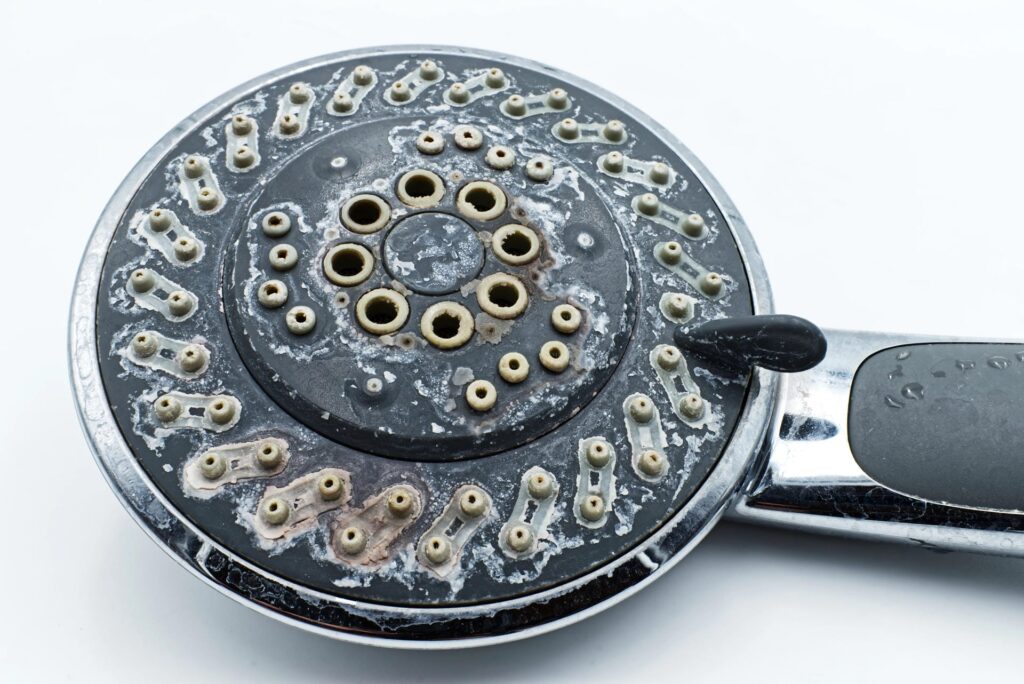
- White crust on faucets, shower doors, and around fixtures
- Brown, orange, or yellow stains in toilets, tubs, and sinks
- Dry, itchy skin and dull or frizzy hair after showering
- Cloudy or milky-looking water from the tap
- Metallic, chlorine, or rotten egg odors
- Blue or green staining on fixtures or in light-colored hair
These visible symptoms are useful diagnostic clues. They help narrow down the likely contaminants, but they need to be confirmed by testing before any treatment decision is made.
Understand what is in Northern NJ water
Water quality issues in Northern New Jersey fall into several main categories. Municipal customers and private well owners can experience different combinations, but the underlying chemistry is often similar.
Hardness and scale
Hard water is extremely common across New Jersey. It is caused by elevated levels of dissolved calcium and magnesium picked up as groundwater moves through limestone-rich rock formations. Hardness does not pose a direct health concern at typical levels, but it creates a long and familiar list of practical problems:
- White limescale on fixtures, glass, and tile
- Shortened appliance life and reduced water heater efficiency
- Soap scum, poor lathering, and residue on skin and hair
Many homes also absorb indirect costs through more frequent fixture replacement and higher energy bills, costs that accumulate quietly before the connection to water quality is made.
Iron, manganese, and staining
In well water areas, dissolved iron and manganese are frequent causes of rust-colored or dark staining. Toilets, showers, and laundry can discolor even when the water looks completely clear at the tap. Even small concentrations of iron can cause noticeable cosmetic damage to fixtures and fabrics.
These metals oxidize when exposed to air or chlorine, which is why staining often appears in toilet bowls or after a load of laundry rather than directly from the faucet.
Sediment and turbidity
Sand, silt, rust particles, and other sediment can enter plumbing from aging mains, well casings, or nearby construction activity. Sediment does not always create a health hazard, but it can:
- Make water appear cloudy or gritty
- Clog aerators, valves, and appliance inlets
- Accelerate wear on pumps, water heaters, and other water-using equipment
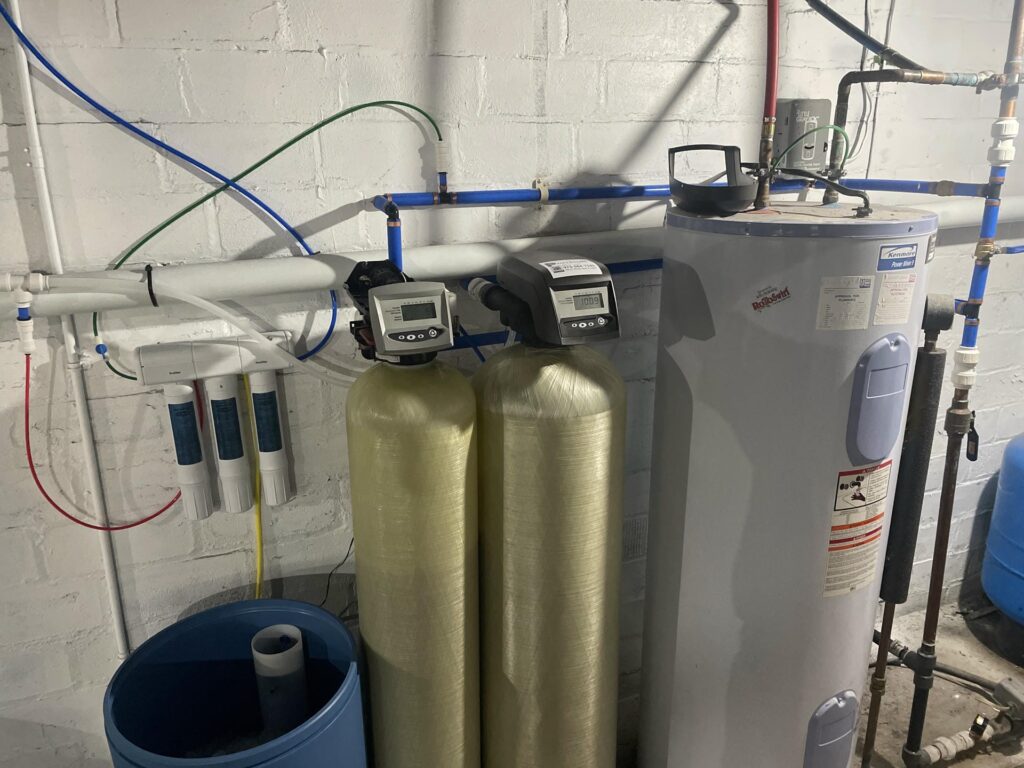
For most comprehensive whole-house systems, sediment filtration is the first line of defense, protecting all downstream equipment from particulate damage.
Corrosive water and metals
Corrosive water, typically associated with low pH or low mineral content, can dissolve copper from pipes and fixtures. The results include pinhole leaks, blue-green staining, and in some cases elevated copper levels in drinking water. Homes built before 1986 face an additional concern: corrosive water can also leach lead from older solder joints, a serious health issue with no visible warning signs.
Chemical and microbial contaminants
Across New Jersey, regulators and utilities monitor a range of contaminants including:
- Chlorine and chloramines used for disinfection
- Disinfection byproducts
- Lead from older service lines and fixtures
- Nitrates, often associated with agricultural or septic activity
- Bacteria and coliform organisms
- Emerging contaminants including PFAS
Municipal systems publish annual Consumer Confidence Reports, but these reflect conditions at the treatment plant, not necessarily at your tap. For private well owners, there is no automatic monitoring. Testing is entirely the homeowner’s responsibility.
Why testing must come before treatment
The most expensive mistake we see is purchasing equipment based on symptoms alone. Cloudy water does not always mean sediment. A rotten egg odor can come from the water heater rather than the well. A glass of water that looks perfectly clear can still contain elevated lead.
Testing before treating protects you in three specific ways:
- It confirms what is actually present. Symptoms suggest; testing confirms.
- It prevents mismatched equipment. A softener does not remove bacteria. A carbon filter does not address hardness. The right system depends entirely on what is in the water.
- It right-sizes your investment. Knowing your exact hardness level, iron concentration, and pH means you buy what you need, not what covers every possibility.
How to approach water testing in Northern NJ
We recommend a structured three-step approach before committing to any treatment system.
Step 1: Collect information about your supply
Municipal customers should obtain their utility’s most recent Consumer Confidence Report. Review it for any noted contaminants, past violations, or boil advisories. This gives you a baseline, but remember it reflects the treatment plant, not your tap.
Well owners should document well depth, age, pump type, and any historical test results. If you have never tested your well, or if the last test was more than a year ago, start fresh. The New Jersey Department of Environmental Protection provides guidance on recommended test parameters for private wells in New Jersey.
Step 2: Conduct appropriate testing
Basic home test kits can give rough readings for hardness and pH. These are useful for initial orientation but are not precise enough to design a treatment system around.
Certified laboratory testing is necessary for metals, nitrates, PFAS, and microbiological contaminants. In New Jersey, certified labs can be found through the NJ DEP’s certified laboratory list. Many local health departments also coordinate or recommend testing resources for well owners.
For private wells, a comprehensive starting panel typically includes:
- Total coliform and E. coli bacteria
- Nitrates
- Hardness, pH, and alkalinity
- Iron and manganese
- Lead and copper
- Arsenic and gross alpha for geological risk areas
- VOC screen if near historical industrial sites
Step 3: Connect symptoms to lab results
Once results are in hand, we compare what you are experiencing at home with measured parameters. Elevated hardness explains scale and soap issues. High iron correlates with orange staining. Low pH explains blue-green staining and metallic taste. This linkage determines whether you need softening, filtration, pH correction, or a combination, and in what order those systems should be installed.
This step is where professional interpretation adds real value. Raw numbers from a lab report can be difficult to translate into equipment decisions without experience in both water chemistry and local conditions.
What your symptoms are already telling you
Even before testing, the pattern of symptoms in your home points toward likely causes. Use this as a starting framework, not a substitute for lab data, but a useful lens for prioritizing your test panel.
Symptom | Likely cause | Confirm with |
|---|---|---|
White scale on fixtures and glass | Hardness (calcium/magnesium) | Hardness test |
Orange or brown staining | Iron or manganese | Iron/manganese panel |
Blue-green staining | Copper corrosion, low pH | pH, copper, lead test |
Rotten egg odor | Hydrogen sulfide or bacterial activity | Sulfur, bacteria test |
Chlorine taste or smell | Disinfection residual | Chlorine/chloramine test |
Cloudy or gritty water | Sediment or turbidity | Turbidity, visual analysis |
Dry skin and dull hair | Hardness, chlorine, or pH | Hardness, pH, chlorine |
Metallic taste | Iron, copper, or low pH | Full metals panel |
In Northern New Jersey, it is common to see more than one issue at the same time. Hard water and iron often appear together on private wells. Corrosive pH and elevated copper frequently go hand in hand in older homes. Testing reveals the full picture.
What comes next
Understanding what is in your water is the essential foundation for every treatment decision that follows. Once you have accurate lab data and a clear picture of your home’s symptoms, the next step is matching specific technologies to specific confirmed problems.
In Part 2 of this guide, we walk through every major treatment technology used in Northern New Jersey homes, from sediment filtration and water softeners to reverse osmosis and UV disinfection, and explain how to choose between whole-house and point-of-use options, what installation involves, and what ongoing maintenance actually looks like. We also show how to bring it all together into a tailored treatment plan that addresses your confirmed issues without unnecessary complexity or cost.
If you would like to get started before reading Part 2, the most productive first step is a professional water test interpreted in the context of Northern New Jersey conditions. Schedule a free water test and we will help you understand exactly what is in your water before you make any equipment decisions.