
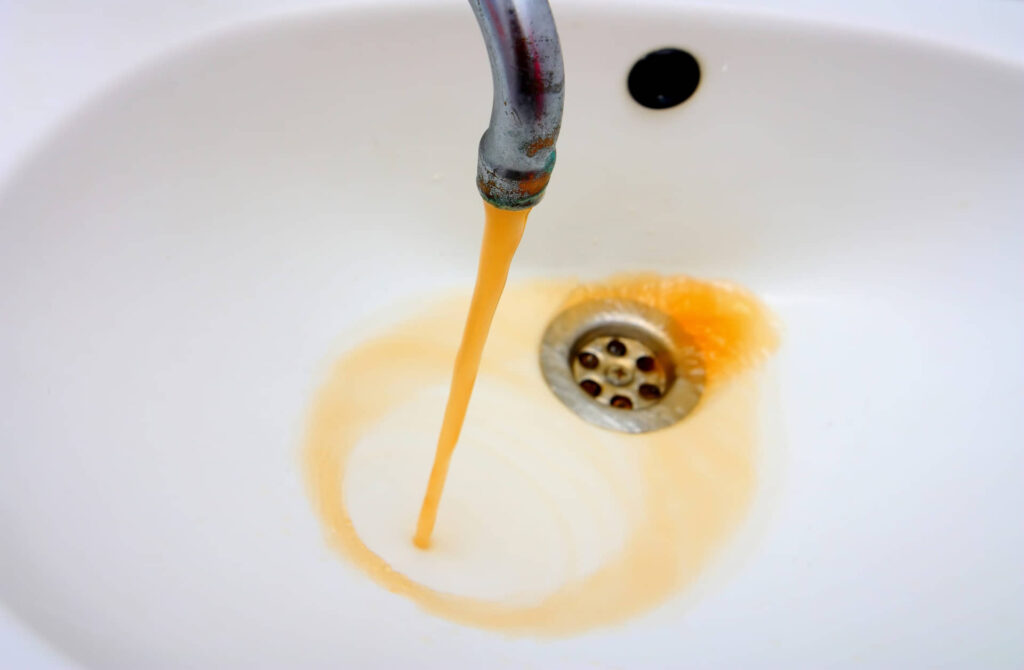
If you are seeing orange, rust-colored, or brown staining in your toilets, sinks, tubs, or on laundry, there is a strong probability that iron in your well water is the source. For Northern New Jersey homeowners on private wells, iron is one of the most common water quality complaints we address, and one of the most frequently misdiagnosed.
Understanding iron in well water starts with recognizing that iron is not a single thing. The type and form of iron in your water determines what treatment actually works, which means guessing at a solution based on visible staining almost always leads to the wrong equipment. Part 1 of this guide covers what iron is, why Northern New Jersey wells are susceptible, the four forms you may be dealing with, and what iron actually does to your home and health. Part 2 covers why testing before treatment is essential, and walks through every major treatment approach used in our region.
Why Northern New Jersey wells have iron problems
Iron is among the most abundant elements in the earth’s crust. In Northern New Jersey, it enters well water through two primary pathways.
Seepage through soil and bedrock: As rainwater and snowmelt move through the soil and into the aquifer, they dissolve iron from surrounding rock and mineral formations. The geological profile of much of Northern New Jersey, including parts of Morris, Sussex, Warren, and Hunterdon counties, contains iron-bearing minerals that contribute to elevated groundwater iron levels.
Corrosion of well components: Iron casings, steel drop pipes, and older pump components inside the well structure itself can corrode and shed rust particles and dissolved iron into the water supply, independent of what is in the surrounding aquifer.
For municipal water customers in Northern New Jersey, iron is less commonly a primary concern because treatment plants address it before distribution. However, older galvanized or cast iron service lines and aging in-home plumbing can still introduce iron and contribute to staining and taste issues at the tap, which is where the connection between water chemistry and plumbing condition becomes important.
Recognizing iron-related problems in your home
Most homeowners identify an iron problem first through what they see or taste, not through a lab report. Knowing what to look for helps you understand the severity and form of the problem before testing confirms the details.
Visible and sensory signs
Iron in water commonly causes:
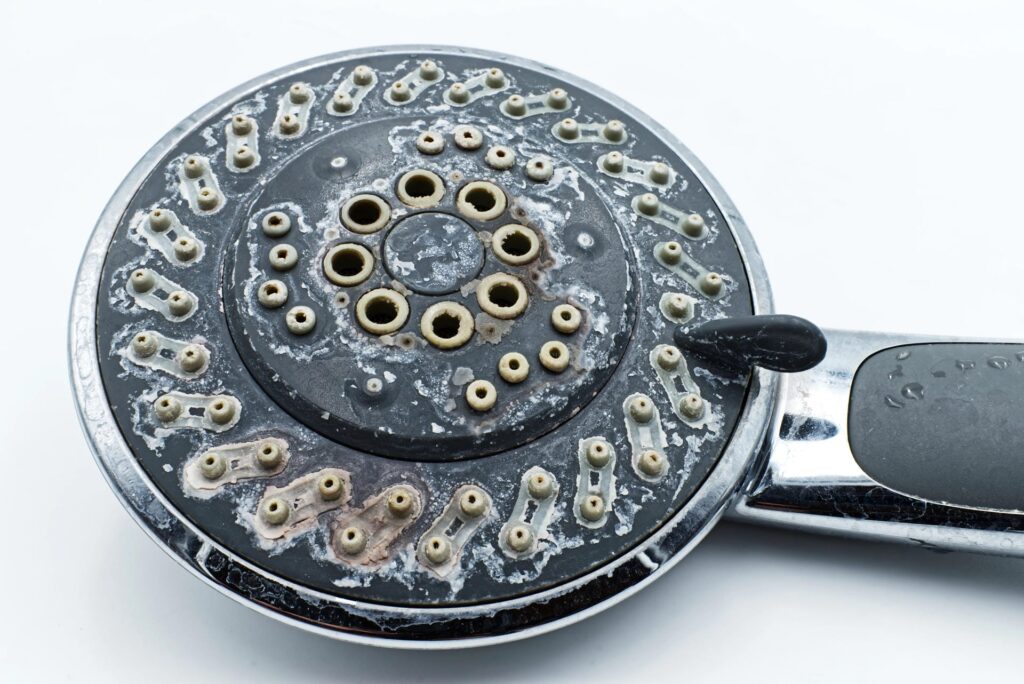
- Reddish-brown or orange staining in toilet bowls, sinks, tubs, and showers
- Yellow, tan, or rust-colored discoloration on white laundry and fabrics
- Brown or orange streaks on dishes and inside the dishwasher
- A metallic taste in drinking water, coffee, and tea
- A metallic or blood-like smell, sometimes combined with a faint musty odor
One characteristic that surprises many homeowners: the water at the tap may look completely clear when first drawn, but then develop orange or brown discoloration as it sits in a glass, toilet bowl, or sink. This is dissolved iron oxidizing on contact with air, a behavior that tells us something specific about the form of iron present.
The scale of the problem
The EPA classifies iron as a Secondary Drinking Water Contaminant, regulated for its aesthetic and practical effects rather than direct toxicity. The recommended secondary maximum contaminant level is 0.3 milligrams per liter. At this concentration, staining is already possible on light-colored fixtures and fabrics. Many Northern New Jersey wells we test show iron concentrations well above this threshold.
It is also important to know that the Safe Drinking Water Act does not cover private wells. Well owners are entirely responsible for testing, monitoring, and treating their own water. There is no automatic notification if iron levels rise. Testing is the only way to know.
The four forms of iron in water and why they matter
This is the part of iron treatment that most one-size-fits-all solutions get wrong. Iron in water appears in four distinct forms, each with different behavior and different treatment requirements.
1. Ferrous iron: “clear water iron”
Ferrous iron is dissolved in the water as an invisible ion. At the tap, the water looks completely clear. But when that water is exposed to oxygen, sitting in a toilet bowl, contacting air in a washing machine, or simply standing in a glass, the dissolved iron oxidizes and converts to ferric iron, which is an orange-brown solid. This is the reddish ring that appears in toilet bowls even when no one has flushed anything colored, and the orange stain that develops on laundry during the wash cycle.
Ferrous iron is the most common form in well water drawn from low-oxygen, deeper groundwater sources. It is sometimes called “clear water iron” precisely because it is invisible until oxidation occurs.
2. Ferric iron: “red water iron”
Ferric iron is already oxidized before it reaches your tap. It exists as suspended particles or fine rust, so you can often see discoloration directly from the faucet, orange or reddish-brown water that does not clear after running. This is sometimes called “red water iron.”
Ferric iron tends to produce intense, immediate staining on fixtures and laundry. It is generally easier to address mechanically than ferrous iron, because the particles are already solid and can be captured by appropriately rated filtration.
3. Organic and colloidal iron
In some wells, iron is bound to organic compounds, typically humic acids from decaying organic matter in the soil. This organic iron does not behave like either ferrous or ferric iron, and it often appears as a yellowish or tea-colored tint rather than orange or rust-colored water.
Colloidal iron exists as extremely fine particles that remain suspended due to their electrical charge. They give water a persistent pink or reddish tinge that does not settle out over time and is very difficult to remove with standard filtration. Treatment typically requires coagulation, chemically clumping the fine particles together, before filtration can capture them effectively.
4. Iron bacteria
Iron bacteria are microorganisms that metabolize iron as part of their biological processes. They are not known to cause illness directly, but they create a characteristic set of problems that distinguishes them from the other iron forms.
Signs of iron bacteria contamination include:
- A reddish-brown, orange, or yellowish slimy or gelatinous buildup inside toilet tanks
- An oily sheen on standing water
- A musty, swampy, or cucumber-like odor from the water
- Accumulation of slime in pipes and around fixtures
The Minnesota Department of Health’s guidance on iron bacteria is one of the most comprehensive publicly available resources on this topic, and it reflects conditions similar to those we see in parts of Northern New Jersey. Iron bacteria form biofilms inside wells and plumbing that can be extremely difficult to eradicate and require a fundamentally different treatment approach from chemical iron removal.
What iron does to your home, appliances, and health
Staining and cleaning
Iron causes persistent, deeply embedded staining on porcelain, ceramic, plastic, and fabric. The staining bonds with the material and becomes progressively harder to remove the longer it is left untreated.
One important caution: chlorine bleach, which is a common first instinct for cleaning iron stains, actually worsens them. Bleach oxidizes dissolved iron and can set the stain more permanently into the surface. Acid-based cleaners, such as oxalic acid or phosphoric acid products, are the appropriate approach for iron stain removal. But cleaning addresses the existing stain, not the ongoing source.
Plumbing and appliance damage
Over time, iron accumulation inside pipes and water-using appliances causes real mechanical harm:
- Iron particles and bacterial biofilms narrow pipe interiors, reducing flow rates and eventually causing partial or complete blockages
- Water heaters, dishwashers, washing machines, and coffee makers experience reduced lifespan as iron deposits accumulate on internal components
- Sprinkler heads and irrigation systems clog, reducing coverage and efficiency
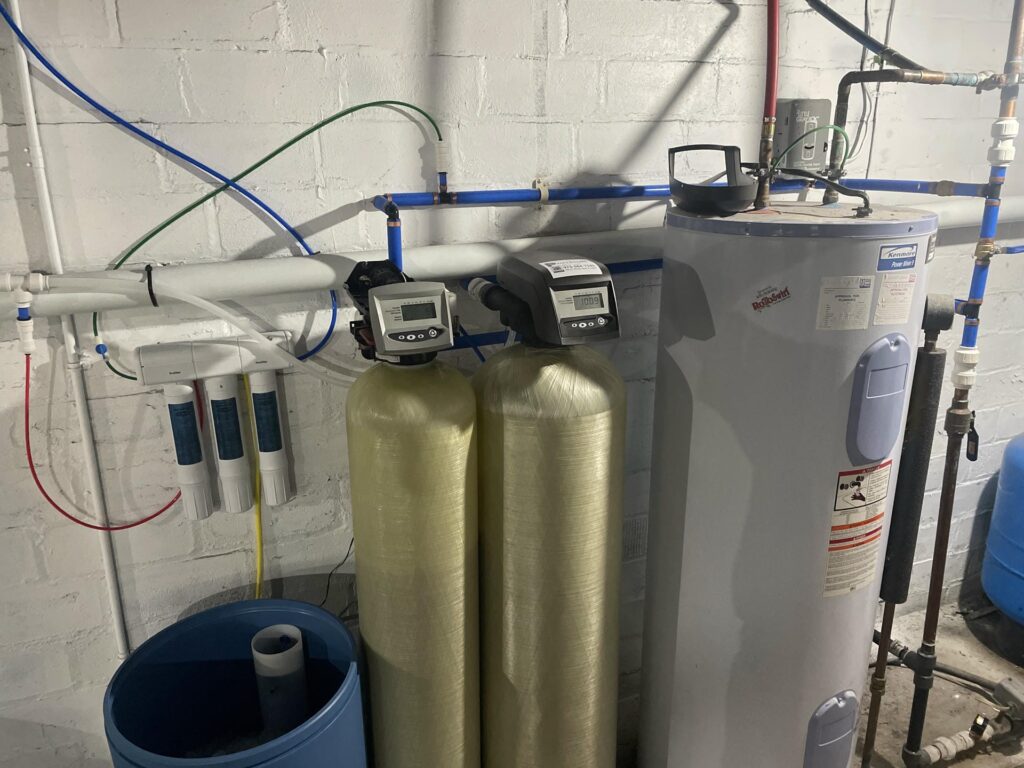
- Softener resin beds become fouled by iron, dramatically reducing their capacity and lifespan if iron is not addressed upstream
The connection between iron in the water and accelerated appliance deterioration is one of the most direct and measurable costs of an untreated iron problem in a Northern New Jersey home.
Hair, skin, and taste
At the concentrations commonly found in Northern New Jersey wells, iron is unlikely to cause direct health harm for most people. However:
- Iron can discolor hair, particularly light or color-treated hair, by depositing on the hair shaft in a manner similar to mineral buildup from hard water
- Metallic taste and odor make drinking water, coffee, and cooked food noticeably less pleasant
- Very high iron concentrations can contribute to skin and scalp irritation in sensitive individuals
It is also common to have both iron and hardness in the same well water, which compounds the effects on skin, hair, and fixtures simultaneously. Understanding which problems come from which contaminants requires testing, which is exactly why Part 2 begins there.
What comes next
Recognizing that you have an iron problem, and understanding the form it is likely taking based on your symptoms, is the essential first step. The second step, which determines whether your treatment investment will actually solve the problem, is proper testing before any equipment is selected.
In Part 2, we cover why testing first matters so specifically for iron treatment, what a targeted iron test panel should include, and the full range of treatment options used in Northern New Jersey homes. We also explain how to choose between them based on your specific iron type, concentration, and supporting water chemistry.
If you are already seeing orange stains and want to understand what you are actually dealing with before reading further, schedule a free water test and we will identify the specific form and concentration of iron in your Northern New Jersey well water.