
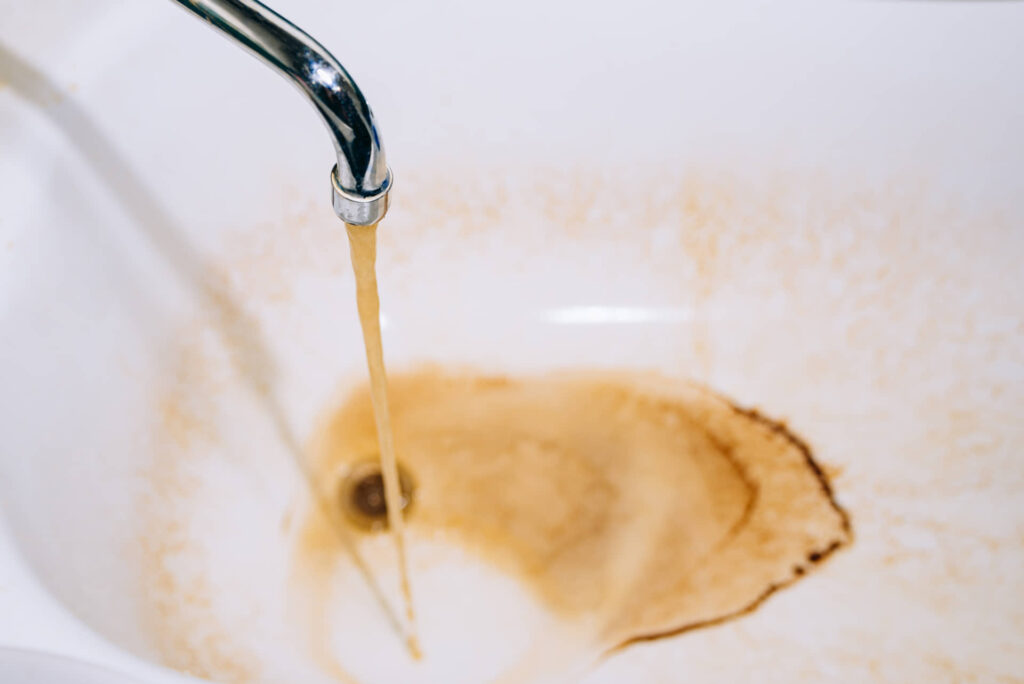
You might notice that iron may be higher in water after precipitation, such as rain or snow. This is a recurring headache in northern New Jersey, especially if you manage a home water system. When the snow melts and spring rains begin, iron may appear in your water.
Signs of iron in your water
Sometimes, iron presence is obvious. Here are a few signs to watch for:
- An orange or brown tint in tap water
- Metallic or unpleasant taste in your drinking water
- Reddish buildup inside your toilet tanks or dishwasher
Solutions
When you catch these signs early, you can often address them before they become bigger, costlier issues. A water softener or Iron filtration system is recommended for iron removal. There are two types of iron, ferrous and ferric. A water test will determine which one you have so the proper equipment is recommended and installed.
Maintenance
If you have a water softener or iron filtration system be sure to regularly maintain your equipment. Softeners require salt to be added every 4-6 months, Softeners and Iron filtration systems may need media changed out every few years. Any water treatment equipment that is mechanical will also need the control valve services and parts replaced over time. These units that remove iron are like cars that are driving thru mud all the time, these working parts need to be replaced. A water treatment professional such as Portasoft of Morris County are trained to program these control valves for optimal performance.
Inline filters need to be replaced when pressure drop in the house.
For deeper reassurance, schedule a water test annually to detect iron levels, pH, TDS changes, or other seasonal fluctuations. Testing helps you decide whether to update your filtration solutions or add corrosion-prevention treatments.
Iron vs Rust in the home
Iron is a mineral that comes from the earth, it is orange or red in color and will stain clothing, sinks, toilets, bathtubs etc. Iron will stain uniformly and does not pick one spot to stain. Water Treatment equipment is used to remove iron from the water.
Whereas, rust will form in spots where water sits on metal when oxygen is present, this is known as oxidation. Rust is the deterioration of metal. Common complaints with rust are when stainless steel knives go into the dishwasher, they come out with brown rust spots. This in not a water quality issue this is a oxidation reaction, water, metal, oxygen and heat all creating a perfect storm for corrosion. Keep in mind stainless does not mean rustless, it means it won’t get stains on it. The solution is to hand wash stainless steel utensils and towel dry them.